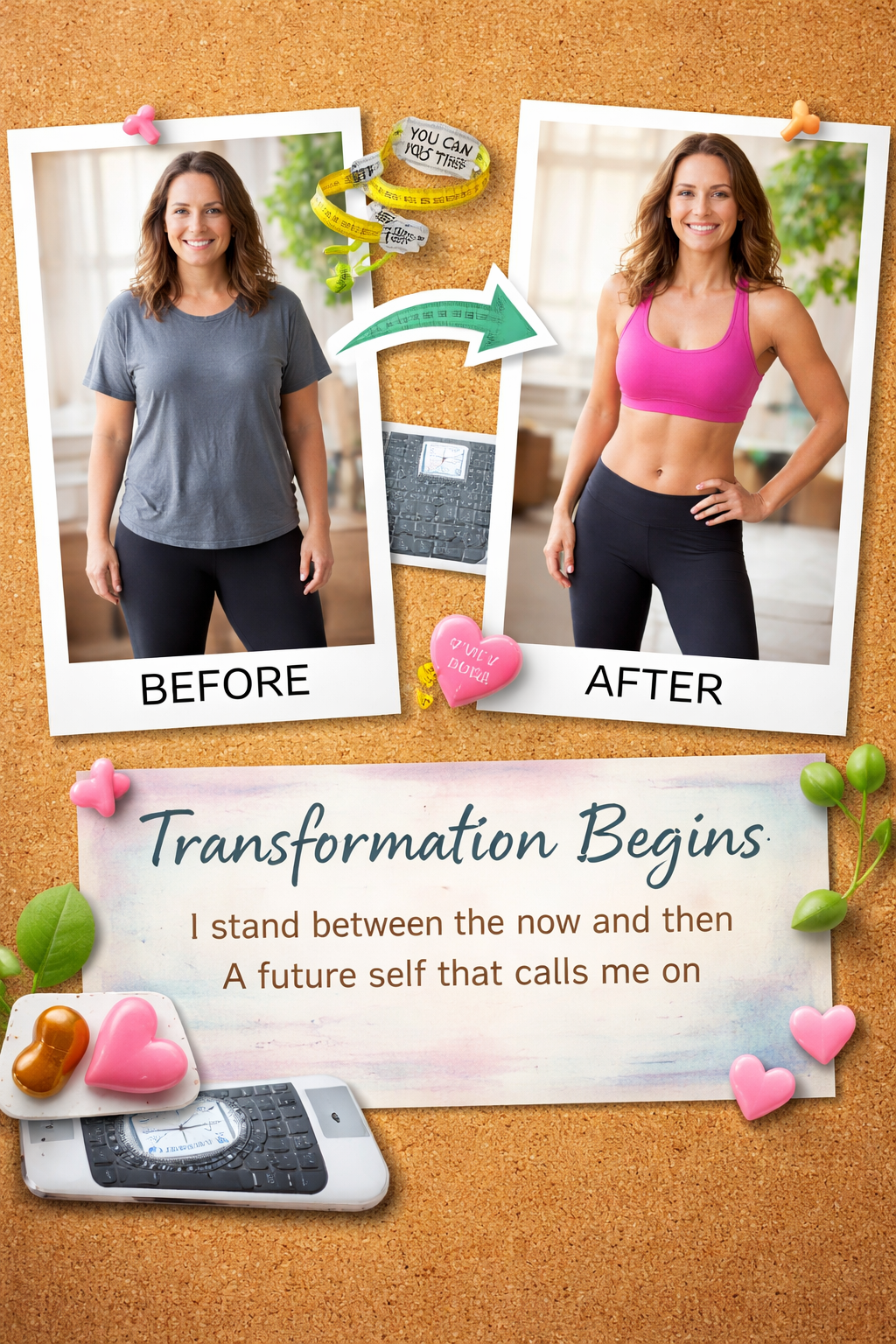
Fitness Goals Are Not the Problem. The Hidden Ones Are.

Fitness goals have a failure rate that should embarrass the entire industry built around setting them. Gym memberships spike in January and collapse by February. Transformation challenges produce transformations that reverse within months. Programs that work — genuinely, demonstrably work — are abandoned by the people they are working for.
The standard explanation is motivation. Discipline. Willpower. The story told is that the goal was right and the person was weak.
That story is wrong.
Nobody fails at their fitness goals. They succeed at different ones — ones they never wrote down, never announced, and never consciously chose, but that were operating beneath the surface the entire time. The person who quits after three weeks did not fail to get fit. They succeeded at staying comfortable. The person who loses twenty pounds and gains it back did not fail to maintain the result. They succeeded at returning to the identity, the habits, and the daily conditions that felt like home.
The goal you set and the goal you actually have are not always the same goal. And until you find the competing one — the one that has been winning — no new program, no new routine, and no renewed commitment will change the outcome.
Why Fitness Goals Fail Before They Start
The conventional fitness goal framework has a structural flaw that produces failure before the first workout ends.
Most fitness goals are outcome-based. Lose 20 pounds. Run a marathon. Build visible muscle. These are destinations — and destinations are useful for direction but useless for daily decision-making. On the Tuesday morning when motivation is low, the alarm goes off early, and the bed is warm, the destination provides no instruction. It provides guilt for not being there yet. It does not tell you what to do in the next five minutes.
Outcome goals also have a finish line problem. They are designed to end. Once the 20 pounds are lost, the program that produced the loss has served its purpose. The identity it requires — the early mornings, the food choices, the training consistency — has not been internalized. It has been tolerated. And tolerating a behavior until the goal is reached is not the same as becoming the kind of person for whom the behavior is simply what they do.
The goal gets reached. The behavior stops. The outcome reverses. The person concludes they failed. They did not fail. The goal framework itself produced exactly the outcome it was designed to produce — a temporary result attached to a temporary commitment.
The Competing Goal Nobody Talks About
Behind every abandoned fitness goal is a competing goal that was never identified — one that is older, more practiced, more deeply wired, and more immediately rewarding than the fitness goal trying to displace it.
Comfort is a goal. Not a weakness — a goal. The body optimizes for comfort with the same relentless efficiency it optimizes for everything else. Years of specific routines, specific foods, specific rest patterns, and specific ways of spending time have been consolidated into a comfort system that the body defends as actively as it defends stored fat. Disrupting it requires more than motivation. It requires understanding that the disruption is fighting a system, not a character flaw.
Identity is a goal. The story a person tells about themselves — “I am not an athletic person,” “fitness has never been my thing,” “I always start and stop” — is not just a description. It is a prediction. And the brain works to make its predictions accurate. Behaving consistently with a fitness goal requires behaving inconsistently with an established identity. That inconsistency creates friction that feels like resistance but is actually the identity system defending its internal coherence.
Belonging is a goal. The social environment a person lives in — the eating habits of their household, the activity level of their friend group, the cultural norms of their community — exerts a pull that most fitness programs completely ignore. A person trying to change their body in an environment that does not change with them is swimming against a current that never stops running.
None of these competing goals make a person weak. They make a person human. The problem is not that they exist. The problem is that fitness goals are set without acknowledging them — which means the competition is invisible, and invisible competition cannot be managed.
What Actually Works: Conditions Over Goals
Every fitness goal failure has the same architecture. A destination is chosen. Motivation carries the behavior for days or weeks. The motivation fades — as it always does, because motivation is a feeling and feelings are not reliable infrastructure. The behavior stops. The competing goal reclaims the territory it was temporarily displaced from.
The framework that produces permanent results does not run on motivation. It runs on conditions — the specific environmental, behavioral, and identity-level changes that make the desired behavior the path of least resistance rather than a daily act of willpower against a system that was there long before the goal was set.
Motivation asks: how badly do you want this? Conditions ask: have you made this easy enough that wanting it is no longer the deciding factor? The first question produces inspiring answers that do not survive contact with ordinary Tuesday mornings. The second question produces environments, habits, and identity commitments that do not require inspiration to operate.
The shift from motivation to conditions is the shift from hoping the competing goal loses to engineering a situation where it cannot win. One is a wish. The other is a strategy.
How to Set Fitness Goals That Actually Stick
Find What Has Been Winning First
Before setting any fitness goal, identify the competing goal already in operation. Not vaguely — specifically. What comfort pattern will this goal disrupt? What daily routine will it interrupt? What identity story conflicts with the person this goal requires you to become? What social environment will resist the change? Write it down. Name it. The competing goal that goes unnamed stays invisible — and invisible competition cannot be managed. Every previous attempt that failed had a winner. Find out what it was.
Make the Identity the Goal, Not the Outcome
A fitness goal framed as an outcome — lose 20 pounds — produces a finite commitment. A fitness goal framed as an identity — I am someone who trains consistently and fuels their body well — produces an ongoing one. Outcomes are reached and abandoned. Identities are inhabited and maintained. The transition from pursuing a goal to being a person for whom the behavior is simply natural is the only finish line that matters — because it is the only one that does not reverse. According to the American Psychological Association, identity-based behavior change produces significantly more durable outcomes than outcome-based goal setting across health behavior research.
Design the Environment to Defeat the Competing Goal
Once the competing goal is identified, design the environment specifically to reduce its advantage. The competing goal of comfort wins when friction is high — when the gym bag is unpacked, the training time is unscheduled, the kitchen is stocked for the old identity rather than the new one. Remove the friction. Pack the bag the night before. Block the training time as a non-negotiable appointment. Make the behavior the competing goal was defeating easier than the behavior that was winning. The environment is not a support system for the fitness goal. It is the primary battleground where the competing goal either wins or loses every day.
Measure the Behaviors, Not the Body
Outcome metrics — weight, body fat, performance numbers — measure the result of the competition between your fitness goal and its competitors. Process metrics — sessions completed, protein targets hit, sleep hours maintained — measure whether your fitness goal is winning the daily competition. A week of perfect process with a scale that did not move is a week your fitness goal won. A week where the scale dropped but the behaviors collapsed is a week the competing goal is regrouping. Measure what you can control. The outcome will follow.
Start Smaller Than You Think You Should
The competing goal of comfort wins most decisively at the moment of overcommitment. The six-days-a-week, complete-dietary-overhaul launch is not ambition. It is the competing goal setting a trap — because overcommitment produces unsustainability, and unsustainability produces abandonment, and abandonment produces the return to the conditions the competing goal was defending all along. The minimum commitment that can be maintained indefinitely defeats the competing goal more completely than the maximum commitment that collapses in three weeks. Two sessions per week for a year compounds into a different body and a different identity. Six sessions per week for six weeks produces neither.
The Identity Shift That Changes Everything
Every person who has permanently changed their body went through the same transition at some point — often without recognizing it when it happened. They stopped trying to achieve a fitness goal and started being a person for whom the behaviors the goal required were simply part of who they are.
They did not find more motivation. They stopped needing as much of it. The behavior became identity-consistent rather than identity-disruptive. The friction disappeared — not because the behavior became easier physically, but because the competing goal of identity preservation stopped fighting it.
This transition cannot be forced. But it can be accelerated — by making the identity statement before the behavior is fully established, by designing environments that make the new identity easy to inhabit, and by accumulating small behavioral evidence that the new identity is real. Every training session completed is a vote for the person you are becoming. Every one skipped is a vote for the person you were. The election is ongoing. The outcome is not predetermined.
Frequently Asked Questions
What is a fitness goal?
A fitness goal is a targeted intention for your physical health, body composition, or performance. But the definition that actually matters is this — a fitness goal is a commitment that will immediately enter into competition with an existing goal you already have. The comfort pattern, the identity story, the social environment that produced your current physical reality did not appear by accident. They are goals too. Understanding that competition is what separates a fitness goal that changes something from one that produces a familiar cycle of start, stall, and return to baseline.
What are some fitness goals?
The most common fitness goals — lose body fat, build muscle, improve cardiovascular fitness, increase strength, run a specific distance — are all legitimate destinations. The more useful question is not which goal to choose but what competing goal is already in operation that will resist it. A fat loss goal competing against a deeply established comfort pattern requires a different strategy than the same goal in an environment already oriented toward physical activity. The goal is less important than understanding what it is competing against.
What is the first step to setting a physical fitness goal?
The first step is not choosing the goal. It is identifying the competing goal that has been winning. Before any program, any timeline, or any commitment is established — find out what has been successfully defended every time a previous attempt was made. What comfort pattern will this goal disrupt? What identity story conflicts with the person this goal requires you to become? What in your current environment is optimized for the result you already have rather than the one you want? That audit is the first step. Everything else is second.
How to set fitness goals that actually work?
Set them against the competing goal rather than in spite of ignoring it. Identify what has been winning. Frame the goal as identity rather than outcome. Design the environment to reduce the competing goal’s advantage before the program begins. Start with the minimum commitment that can be sustained indefinitely rather than the maximum that collapses in three weeks. Measure process behaviors rather than outcome metrics. And understand that the goal is not the finish line — becoming the person for whom the behavior is simply natural is.
How to reach your fitness goals?
By recognizing that reaching them is not primarily a physical challenge — it is a competition between the goal you set and the goal that was already operating before you set it. The people who reach their fitness goals and keep the results are not more motivated or more disciplined than the people who do not. They stopped having a fitness goal and started being a person for whom the behaviors that goal required became part of their identity. The reach is the transition from pursuing to being.
What are some fitness goals for men over 50?
The most impactful fitness goals for men over 50 address the metabolic changes that accelerate after that decade — specifically the decline in lean muscle mass, the reduction in anabolic hormone levels, and the decrease in cardiovascular capacity that compound silently without consistent training. Building and maintaining lean muscle through resistance training two to four times per week, sustaining aerobic capacity through consistent moderate-intensity work, and prioritizing sleep as the primary anabolic recovery window are the goals with the largest return on investment at this stage. The competing goal that most commonly resists them at this age is not comfort — it is the identity story that significant physical change is no longer possible. That story is not supported by the research. It is supported by the absence of evidence that contradicts it — which consistent training provides.