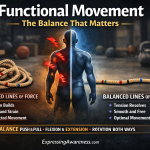

The hardest part about failing to reach a goal isn’t the lack of effort – it’s discovering you’ve been working against yourself the entire time.
One major cause is misalignment. Alignment means all the parts – actions, habits, and movements – work together toward a goal. Misalignment means some parts pull against others, creating internal resistance that wastes energy and limits results.
What makes misalignment so insidious is that it doesn’t necessarily stop progress altogether – it just leaks energy. You’re still moving forward, so it feels like things are working. But the progress is slower than it should be, and without measurement, it’s nearly impossible to notice the drain. You keep pushing harder, wondering why results don’t match the effort.
To see how this works, consider something as simple as jumping.

Insight #1: The Anatomy of Self-Sabotage
Two athletes jump the same to rise,
But only one will reach the prize.
The squat jump is a simple athletic movement: start in a squat position, then explode upward as high as possible. The goal is clear – maximum vertical height. But watch these two videos of young female athletes performing the same jump.
In the video below, hand movements match the intent of the squat jump.
In the video below, hand movements do not match the intent of the squat jump.
In the first video, the athlete brings her hands up toward her chest as she jumps. In the second video, the other athlete brings her hands down. Different athletes, same intention, similar leg power – but one critical difference in arm movement.
That single difference reveals everything about alignment and misalignment.
Gap Between Intent and Action
She means to rise with all her might,
But downward arms oppose her flight.
Both athletes have the same conscious goal: jump as high as possible. Both intend to move upward with maximum force. But intention and action don’t always match.
The first athlete’s arm movement matches her intention – everything moves up. The second athlete’s arm movement contradicts her intention – while she intends to go up, her arms actually move down. This gap between what we intend to do and what we actually do is the first sign of misalignment.
The Invisible Problem
The crowd around her moves the same,
She cannot spot her flawed aim.
Here’s what makes misalignment so difficult to correct: the second athlete likely doesn’t realize her arms are moving down, or if she does notice, she doesn’t understand the cost. From her perspective, she’s jumping with full effort. She feels her legs pushing hard. She’s trying her best.
She may also find confirmation and comfort in seeing many others perform the motion the same way. If everyone around her brings their arms down when they jump, it feels normal, even correct. She gets results – she does jump off the ground – so why question it?
Without detailed study and understanding of the forces involved, she may continue getting results while never knowing the potential she has lost. Investigating the details becomes challenging not just because it requires time to understand how things work, but because it means stepping outside the norm. It means questioning what everyone else accepts as fine.
Without measurement – without seeing herself from the outside – the real problem remains hidden, protected by both her own unawareness and the comfort of doing what others do.
The Energy Equation
She battles self with each ascending strain,
While secret losses drain her strength in vain.
When the second athlete’s arms move down while her legs push up, these opposing forces happen simultaneously. As her body rises, her arms pull downward at the exact same moment. The downward momentum of her arms creates a force that opposes the upward movement her legs are generating.
Her legs must produce enough force to lift her body and counteract the downward pull of her arms – all happening at once. Energy spent fighting this internal opposition is energy that cannot fully contribute to upward motion. Every jump becomes less efficient than it could be.
She’s working harder but getting less height, not because she’s weak or uncommitted, but because some of her effort is working against the rest in real time.
This is the true cost of misalignment: wasted energy that never shows up as progress.
When Everything Moves Together
When every part ascends in perfect time,
Her effort flows as one coordinated climb.
Watch the first athlete again. As her legs extend and drive her body upward, her arms swing up toward her chest at the same moment. Every part of her body accelerates in the same direction simultaneously.
The upward motion of her arms adds to the upward force her legs create. There’s no internal opposition to overcome, no energy wasted fighting herself. Her arm swing contributes momentum that compounds with the power from her legs. The forces don’t just add up – they work together, creating a coordinated explosion of upward movement.
This is what alignment looks like: all parts moving in the intended direction at the same time. No conflict, no wasted energy, just efficient transfer of effort into result.
The Deceptive Part: It Still Works
She jumps, she lands, she thinks she’s doing well,
But hidden drains prevent her true excel.
Here’s why the second athlete might never fix her misalignment: she still jumps. She leaves the ground. She gets results.
The misalignment doesn’t cause complete failure – it causes inefficiency. She’s not unable to jump; she just can’t jump as high as her physical capability would allow. The difference might be a few inches, maybe less. Without careful measurement or comparison, that gap is nearly impossible to detect.
This makes misalignment far more insidious than obvious failure. If she couldn’t jump at all, the problem would be clear and she’d be forced to investigate. But because she gets some result, the lost potential remains invisible.
Over time, this creates a dangerous pattern. Her progress may come slowly – so slowly that she may never reach the point where training feels sustainable and rewarding.
What makes this especially problematic is that it’s difficult for her to attribute the lack of progress or even failure to misalignment. She’s far more likely to blame other factors: lack of stamina, insufficient discipline, poor genetics, not training hard enough. The real cause – the mechanical inefficiency of opposing forces – remains hidden while she questions her own commitment or capability.
The aligned athlete accelerates toward competence quickly enough to stay motivated. The misaligned athlete grinds forward at half speed, working harder for slower gains, wondering why improvement feels so exhausting and whether she has what it takes to continue.
Insight #2: The Principle of Directional Alignment
The pattern lives in every goal we chase,
When scattered parts lose power, rhythm, grace.
What you just witnessed in the squat jump isn’t unique to athletics. It’s a fundamental principle that operates across every domain of human effort: alignment amplifies, misalignment drains.
The structure is always the same:
- A clear intention (jump high, learn deeply, build a skill)
- Multiple parts that could contribute (body movements, daily habits, practice methods)
- The critical question: Are all parts moving toward the intention, or are some working against it?
When parts align – when every element moves in the intended direction simultaneously – effort compounds. Energy flows cleanly from action to result. Progress accelerates.
When parts misalign – when some elements pull against others – effort fragments. Energy gets consumed by internal conflict before it can contribute to the goal. Progress slows or stalls, often invisibly.
The squat jump makes this visible because the misalignment is physical and measurable. In most areas of life, the opposing forces are hidden, making the drain nearly impossible to detect without deliberate examination.
Why Misalignment Goes Unnoticed
The drain feels normal when it’s all we know,
Like headwinds we forget make progress slow.
Misalignment persists because it rarely announces itself. Unlike complete failure, which demands attention, misalignment allows just enough success to feel acceptable. You’re still moving forward. You’re still getting results. The problem hides in the gap between what is and what could be.
Three factors make this gap nearly invisible:
Social confirmation. When everyone around us operates with the same misalignments, they feel normal. The student who crams for tests sees everyone else cramming. The athlete with poor form sees others using the same technique. Conformity provides comfort and masks inefficiency.
Lack of measurement. Without external feedback – video analysis, careful tracking, expert observation – we rely on how effort feels rather than what it produces. Misalignment doesn’t feel different from alignment when you’re inside it. Both require effort. Both produce some result.
Attribution errors. When progress comes slowly, we blame ourselves rather than our methods. We assume we lack talent, discipline, or commitment. The real cause – structural inefficiency – remains hidden while we question our worth.
The Cost Accumulates Over Time
Small leaks at first seem hardly worth the care,
But years reveal the distance to despair.
The true cost of misalignment isn’t visible in a single action. One jump with poor form costs a few inches. One study session with ineffective methods costs a few percentage points. One day of scattered habits costs a few hours.
But these small inefficiencies compound. The aligned athlete improves 2% faster per session. Over a year, that’s not 2% better – it’s the difference between reaching a sustainable training rhythm and burning out before progress becomes self-reinforcing.
The misaligned learner needs twice as many hours to reach the same understanding. Over months and years, this doesn’t just mean more time spent – it means many never reach the point where learning feels rewarding enough to continue.
This is where acceleration matters most. When progress comes too slowly, we give up before reaching the zone where momentum carries us. We abandon the goal not because it was impossible, but because the misalignment made the journey unsustainably difficult.
The cruel irony: the people who quit often have the most to gain from continuing. They’re not less capable – they’re trapped in inefficient systems that make every step harder than it needs to be.
Recognizing the Pattern Everywhere
Once seen in motion, structure can’t unsee,
The same design in all we strive to be.
Once you understand the structure of alignment and misalignment, you begin to see it everywhere:
The writer who wants to create meaningful work but scrolls social media during writing time – intention points one direction, action pulls another.
The person who wants to build strength but trains without progressive overload or adequate recovery – effort expended, but key elements working against the goal.
The learner who wants deep understanding but only studies the night before exams, rewarding memorization over comprehension – stated goal contradicted by actual behavior.
In each case, the pattern is identical to the squat jump: clear intention, genuine effort, but parts of the system working in opposition. The domain changes. The surface details change. The fundamental structure remains the same.
This is why understanding deeply in one area transfers to others. The biomechanics of jumping and the psychology of habit formation look nothing alike on the surface. But the principle of directional alignment operates identically in both.
The Path Forward
The pattern known, the choice becomes more clear,
Align the parts or watch them interfere.
Understanding misalignment is necessary but not sufficient. The real work lies in identifying where your own parts pull against each other and reorganizing them to flow in the same direction.
This requires three shifts:
From feeling to measuring. Trust objective measurement over internal sensation. What you think you’re doing and what you’re actually doing may not match. Track concrete, measurable outcomes over time – actual height jumped, actual skills acquired, actual progress made. Compare your rate of improvement to those who excel in the field – not just by listening to their advice, but by observing their actual performance and results. What height do they actually achieve? How quickly did they actually progress? Expert advice can be misleading if it doesn’t match what experts actually do. Watch what produces results, not just what people say produces results.
From blame to diagnosis. When progress stalls, resist the reflex to question your capability. Instead, examine your system. Are all parts moving toward the goal, or are some creating hidden resistance?
From conformity to optimization. Just because everyone does it the same way doesn’t mean it’s efficient. The crowd often shares the same misalignments, moving forward together at half speed, none realizing the potential being lost.
The good news: once identified, misalignment can be corrected. The energy you’re already expending doesn’t need to increase – it just needs to flow in the same direction.
Insight #3: Examples Beyond Athletics
The jump reveals what habits also hide,
Where effort flows or crashes from inside.
The principle of directional alignment transcends the gym. Once you recognize the structure in physical movement, you begin to see it operating in every area where intention meets action. The domains look different on the surface, but the mechanics of alignment and misalignment remain identical.
Learning and Skill Development
She studies hard but methods contradict,
Her genuine desire to learn constrict.
A student wants deep mathematical understanding. She genuinely values comprehension over grades. But her actual study habits tell a different story:
She waits until the night before exams to review, training her brain to prioritize short-term retention over long-term understanding. She focuses on memorizing formulas rather than working through problems until the underlying logic becomes clear. She rushes through practice sets to finish assignments rather than sitting with confusion until it resolves.
Her intention points toward understanding. Her actions point toward performance. These are opposing forces, like arms moving down while jumping up. She works hard – genuinely exhausted after study sessions – but most of that effort goes toward overcoming the internal conflict between what she says she wants and what her methods actually develop.
The aligned learner spaces practice over time, works problems slowly until concepts click, and prioritizes confusion as a signal to dig deeper rather than move faster. Same subject, same intelligence, different acceleration toward competence.
Personal Habits and Daily Routines
His morning holds the promise he will change,
By evening, scattered choices rearrange.
A person wants to build physical strength and energy. He sets the intention clearly: train consistently, eat well, sleep enough. He genuinely commits to the goal.
But his actual daily structure undermines it:
He stays up late scrolling because “unwinding” feels necessary after a stressful day, cutting into the sleep his body needs for recovery. He skips breakfast to save time, then feels depleted by afternoon and reaches for quick energy instead of real nutrition. He schedules workouts but places them after his most draining work tasks, when willpower is lowest and cancellation feels justified.
Each individual choice seems reasonable in isolation. Together, they create a system where every element of his day makes the goal harder to reach. His intention says “build strength.” His routine says “deplete resources.”
The misalignment isn’t laziness – it’s structural. He’s working against himself with the same effort that could move him forward if redirected. The aligned version organizes sleep, nutrition, and training to support each other rather than compete for the same limited energy.
Creative Work and Expression
The artist knows the work she wants to make,
But fear and doubt determine what she’ll take.
A writer wants to create meaningful, authentic work. She has stories worth telling and a genuine drive to share them. Her intention is clear.
But her actual creative process contradicts it:
She edits while drafting, stopping the flow to polish sentences before the thought is complete. She compares early work to published masters, triggering paralysis before momentum builds. She waits for perfect conditions – the right mood, enough time, complete clarity – rather than showing up consistently to build the practice.
Her intention says “create authentically.” Her methods say “protect yourself from judgment.” These forces oppose each other. She expends enormous energy but most of it goes toward managing internal conflict rather than producing work.
The aligned creator separates drafting from editing, allowing ideas to flow before refining them. She compares her current work to her past work, measuring progress against her own development. She shows up consistently in imperfect conditions, building momentum that makes the work sustainable.
Same creative vision. Different acceleration toward expressing it.
Insight #4: Why Misalignment Persists
We cling to patterns even when they fail,
Familiar struggle beats the unknown trail.
Understanding misalignment doesn’t automatically correct it. Even when we recognize the pattern, powerful forces keep us locked in inefficient systems. These forces aren’t character flaws – they’re human responses to uncertainty and risk.
Multiple Valid Concerns Creating Competing Priorities
Each pull feels right when seen alone,
Together they leave progress overthrown.
The basketball player who brings the ball down while jumping isn’t being careless. She’s protecting possession from defenders – a legitimate tactical concern. The downward motion serves a real purpose, even as it undermines vertical height.
This pattern repeats everywhere:
The student who crams the night before isn’t lazy – she has three other assignments due the same week. Short-term survival competes with long-term learning.
The person who scrolls before bed isn’t undisciplined – his mind genuinely needs transition time after a demanding day. The need for psychological relief competes with the need for physical recovery.
Each competing priority feels valid in isolation. The problem emerges when we try to serve all of them simultaneously without recognizing they pull in opposite directions. We end up compromising each goal rather than sequencing them or choosing deliberately which to prioritize.
Actions That Seem Helpful But Create Drag
She adds more weight to prove her dedication,
Not seeing how it slows her elevation.
Some misalignments persist because they’re disguised as virtue. They look like commitment, thoroughness, or responsibility – making them nearly impossible to recognize as problems.
The writer who endlessly revises the first chapter believes she’s pursuing excellence. She doesn’t realize she’s avoiding the vulnerability of completing something that can be judged.
The athlete who trains seven days a week believes he’s maximizing progress. He doesn’t recognize that recovery is when adaptation happens – without it, he’s just accumulating fatigue.
The learner who takes meticulous notes in every class believes she’s being diligent. She doesn’t see that transcribing lectures prevents the active processing that builds understanding.
These actions feel productive. They require effort. They signal seriousness. But they create resistance to the very goals they claim to serve. The hardest misalignments to correct are those we’ve convinced ourselves are strengths.
The Difficulty of Seeing Our Own Contradictions
The gap between our words and deeds stays blind,
We see the world more clearly than our mind.
We are remarkably good at spotting contradictions in others and remarkably poor at seeing them in ourselves. This isn’t stupidity or denial – it’s how human perception works.
When we act, we experience our intentions directly. We feel the effort, the commitment, the genuine desire to succeed. This internal experience is vivid and convincing.
When we observe results, we see them through the lens of that internal experience. Slow progress must mean the goal is difficult or we lack talent – because we know we’re trying hard. The possibility that our methods oppose our goals doesn’t occur to us because our intentions feel so clear.
This is why external measurement matters. The video doesn’t care about the athlete’s intentions – it shows what actually happened. The data doesn’t care about the student’s effort – it shows what was actually learned. The results don’t care about the writer’s commitment – they show what was actually created.
Without something outside ourselves to reveal the gap between intention and action, we remain trapped inside our own perspective, unable to see the contradictions that limit us.
Insight #5: Achieving True Alignment
The scattered parts hold power yet untapped,
When rearranged, potential is unwrapped.
Alignment isn’t about working harder. It’s about reorganizing the effort you’re already expending so that all of it flows toward your goal instead of fighting itself. This requires a systematic approach to identifying and correcting misalignments.
Identify All the Moving Parts
Before the fix, you first must see the whole,
Each part that aids or hinders toward the goal.
You cannot align what you haven’t identified. The first step is mapping every element that contributes to or detracts from your goal.
For the athlete: body positioning, arm swing, timing, breathing, mental focus, training schedule, recovery practices, nutrition.
For the learner: study timing, environment, methods (active recall vs. passive review), sleep, stress management, social comparison patterns.
For the creator: workspace setup, creative rituals, feedback loops, editing timing, comparison habits, perfectionism triggers, publishing rhythm.
Make the list exhaustive. Many misalignments hide in the parts we don’t think to examine. The athlete focused on leg strength doesn’t consider arm position. The student focused on study hours doesn’t consider sleep quality. The writer focused on daily word count doesn’t consider the paralysis triggered by premature editing.
Every part of your system either moves you toward your goal, moves you away from it, or has no effect. Until you can see all the parts, you cannot know which category each belongs to.
Examine Actual Motion, Not Stated Purpose
What we intend and what we do diverge,
True alignment needs the gap to merge.
Once you’ve identified the parts, examine what they actually do, not what they’re supposed to do or what you think they do.
Ask: Does this action move me toward my goal or away from it? Ignore intentions. Ignore how hard you’re working. Look only at the directional vector.
The student who takes detailed notes believes she’s learning. But if note-taking prevents her from processing concepts in real-time, the action moves away from understanding, regardless of intention.
The athlete who does extra training believes he’s accelerating progress. But if the extra volume prevents recovery, it moves away from performance gains, regardless of dedication.
The writer who researches for months before writing believes she’s ensuring quality. But if research becomes a way to avoid the difficulty of drafting, it moves away from completed work, regardless of thoroughness.
This examination requires brutal honesty. It means acknowledging that some of our most effortful actions might be working against us. It means separating what we wish were true from what the evidence shows is true.
Measure outcomes. Track actual progress. Compare your rate of improvement to benchmarks. The data will reveal which parts of your system contribute and which create drag – if you’re willing to see it.
Eliminate, Redirect, or Sequence Opposing Forces
Some parts must go, some rearranged in time,
Until the whole moves upward in its climb.
Once you’ve identified which parts oppose your goal, you have three options:
Eliminate: Some actions provide no value – they only create resistance. Stop doing them entirely. The athlete who brings arms down while jumping should simply stop that motion. The student who highlights text without processing it should stop highlighting. The writer who edits while drafting should stop opening the editor until the draft is complete.
Redirect: Some actions serve a legitimate purpose but point the wrong direction. Redirect them to support your goal. The person who scrolls before bed needs psychological transition – redirect that need toward reading or journaling instead of screen time. The athlete who overtrains needs to express commitment – redirect that energy toward recovery practices that actually build capacity.
Sequence: Some actions serve valid but competing purposes. Don’t eliminate them – sequence them so they don’t interfere with each other. The basketball player can protect possession AND maximize vertical jump by timing when to bring the ball down (after takeoff, not during). The student can complete assignments AND build deep understanding by spacing work across weeks instead of cramming all priorities into one night.
The goal isn’t to remove every complexity from your system. It’s to ensure that when multiple parts are operating, they don’t work against each other. Eliminate the truly counterproductive. Redirect what can be salvaged. Sequence what must coexist.
Test, Measure, Refine
No perfect alignment comes in one attempt,
Through testing, measuring, we find where we’re adept.
Alignment is discovered through iteration, not revelation. Make a change, measure the result, refine based on what you learn.
The athlete adjusts arm position and measures jump height. Higher? Keep the change. Same or lower? Try a different adjustment. Over time, through repeated measurement, the optimal form reveals itself.
The learner experiments with study methods – active recall versus rereading, spaced versus massed practice, teaching others versus solo review. Track what actually leads to retention and understanding, not what feels most comfortable or looks most studious.
The creator tests different workflows – drafting before editing, fixed hours versus flexible time, accountability partners versus solo work. Measure what actually produces completed work and sustainable practice, not what seems most professional or serious.
This process requires two things many people resist:
Patience for iteration. Alignment emerges gradually through many small adjustments, not one dramatic fix. Trust the process of progressive refinement.
Honesty about results. If a change doesn’t improve outcomes, admit it and try something else. Don’t cling to methods because they feel right or look impressive. Follow the data toward what actually works.
The beautiful part: once you’ve identified alignment in one domain, the pattern transfers. The discipline of examining actual motion versus stated purpose, of eliminating opposing forces, of measuring and refining – this applies everywhere. Learn it once, use it everywhere.
Conclusion
When all your parts align and push as one,
The impossible becomes what you have done.
The principle is simple: alignment amplifies, misalignment drains.
The practice is challenging: identifying the hidden ways we work against ourselves requires honesty, measurement, and the courage to abandon familiar patterns that no longer serve us.
But the payoff is transformative. The athlete with aligned mechanics doesn’t just jump higher – she discovers what her body is actually capable of when nothing works against it. The learner with aligned methods doesn’t just understand faster – she reaches the sustainable zone where learning becomes its own reward. The creator with aligned practice doesn’t just produce more work – she experiences the flow state where creation feels effortless because every part of her system supports it.
This is the multiplier effect of alignment. You don’t need to work twice as hard to get twice the results. You need to reorganize the effort you’re already expending so it flows in one direction instead of fighting itself.
The gap between your current performance and your potential isn’t always about capability. Often, it’s about alignment. The same effort, properly directed, can carry you exponentially further than scattered force ever could.
The path forward:
See the structure in one domain – really see it, deeply understand it, until you can spot the pattern of intention versus action, of parts working together or against each other.
Then look for that same structure everywhere else. In your habits, your relationships, your work, your creative practice. Wherever you expend effort toward a goal, ask: are all the parts moving in the same direction?
When you find misalignment, correct it. Not by working harder, but by redirecting the work you’re already doing.
And measure. Always measure. Because misalignment hides in the gap between what we think we’re doing and what we’re actually doing. Without measurement, we remain blind to our own contradictions.
The squat jump was never just about jumping. It was about seeing a principle that operates everywhere – one you now carry with you, ready to recognize in whatever domain you choose to apply it.
Your parts are already in motion. Your effort is already being expended. The only question is: are they moving together, or fighting each other?
Align them, and discover what becomes possible.